If you’ve spent any time on TikTok lately, you’ve probably seen the “pink salt trick” — a three-ingredient morning drink that creators claim curbs cravings, de-bloats, and melts fat. Search interest in the recipe has climbed sharply in 2026, and the hashtag has racked up millions of views.
Here’s the honest verdict up front: no ingredient in this drink burns fat. If the scale moves after a few days of drinking it, that’s water — your body shifting fluid as its sodium and potassium levels rebalance — not fat loss. The real, more modest benefit is better hydration and electrolyte balance, which can quiet the false hunger signals that come from mild dehydration. That’s a genuinely useful habit. It’s just not the fat-melting shortcut the hashtag promises.
This guide gives you the exact recipe, explains what’s actually happening in your body when you drink it, and covers who should be careful before trying it.
What Is the Pink Salt Trick?
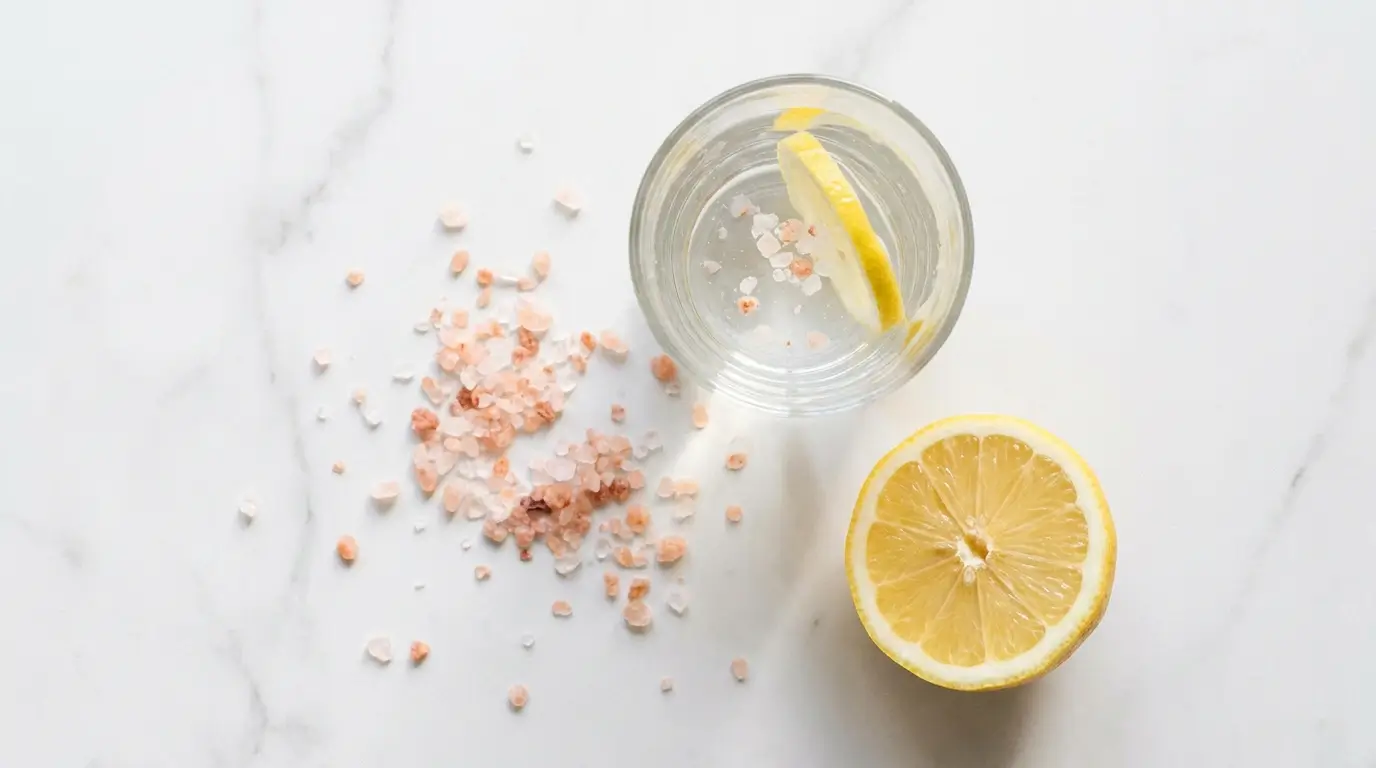
The viral pink salt drink — also called the “Korean pink salt trick” in some corners of TikTok — is a morning tonic made from three pantry staples: Himalayan pink salt, fresh lemon juice, and water. Some versions add a pinch of cream of tartar for extra potassium, or a small amount of raw honey.
It isn’t a meal replacement, and it isn’t a substitute for any prescription appetite suppressant. At its core, it’s a way of front-loading fluids and a small amount of electrolytes first thing in the morning — before food, before coffee, before the day gets away from you.
One real distinction worth knowing: Himalayan pink salt isn’t the same as ordinary table salt. Both are mostly sodium chloride, but pink salt retains trace minerals — including magnesium, potassium, calcium, and iron — that are stripped out of processed table salt. Those trace amounts are small, but they’re the reason this recipe calls for pink salt specifically rather than whatever’s in your table salt shaker.
The Pink Salt Trick Recipe
This is the base version — three ingredients, about two minutes, no special equipment.
- Prep time: 2 minutes
- Servings: 1
- Calories: about 5–10 kcal
- Sodium: about 130–180 mg per serving
Ingredients
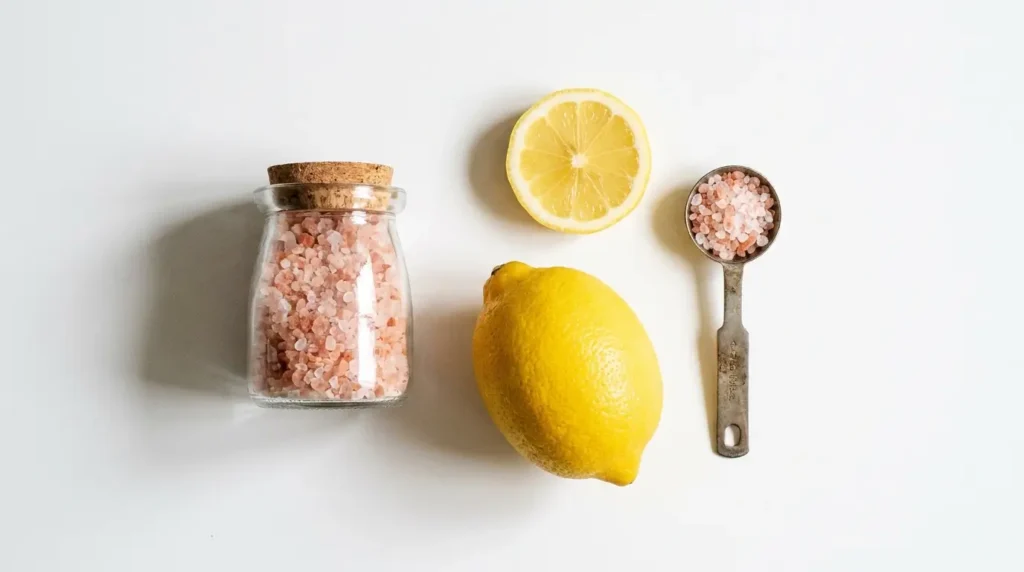
| Ingredient | Amount | Notes |
|---|---|---|
| Filtered water | 12–16 oz (350–475 ml) | Room temperature or slightly warm |
| Himalayan pink salt | ⅛ tsp (0.6 g) | Don’t substitute regular table salt |
| Fresh lemon juice | 1 tbsp (15 ml) | About half a medium lemon |
| Cream of tartar (optional) | ⅛ tsp (0.6 g) | Adds potassium — see note below |
| Raw honey (optional) | ½ tsp (2–3 g) | Skip it if you’re tracking carbs |
Instructions
- Pour 12–16 oz of room-temperature or slightly warm filtered water into a glass or jar.
- Add ⅛ teaspoon of Himalayan pink salt and stir for 20–30 seconds, until fully dissolved.
- Squeeze in 1 tablespoon of fresh lemon juice and stir again.
- If you’re using cream of tartar, add it now and stir until dissolved.
- Drink it on an empty stomach, ideally 20–30 minutes before breakfast.
Nutrition Per Serving (Base Recipe, No Honey)
| Nutrient | Amount |
|---|---|
| Calories | ~5 kcal |
| Sodium | ~130–180 mg |
| Potassium | ~10–15 mg (trace) |
| Vitamin C | ~8–10 mg |
| Carbohydrates | ~1 g |
About the cream of tartar: adding ⅛ teaspoon brings roughly 125–150 mg of potassium to the drink, which noticeably improves the sodium-to-potassium ratio — this is the version closest to what people mean by the “Korean pink salt trick.” Skip it if you have kidney disease or take potassium-sparing medication, since cream of tartar is a concentrated potassium source.
Pink Salt Trick Drink (3-Ingredient Recipe)
A simple 3-ingredient morning drink — Himalayan pink salt, lemon juice, and filtered water — used to support hydration and electrolyte balance before breakfast. It won’t melt fat, but it’s a genuinely useful ritual inside a balanced routine.
- Prep Time: 2 minutes
- Cook Time: 0 minutes
- Total Time: 2 minutes
- Yield: 1 serving 1x
- Category: Beverages
- Method: No-Cook
- Cuisine: American
- Diet: Low Calorie
Ingredients
- 12–16 oz (350–475 ml) filtered water, room temperature or slightly warm
- ⅛ tsp (0.6 g) Himalayan pink salt
- 1 tbsp (15 ml) fresh lemon juice, about half a medium lemon
- ⅛ tsp (0.6 g) cream of tartar (optional — adds potassium)
- ½ tsp (2–3 g) raw honey (optional — omit if tracking carbs)
Instructions
- Pour 12–16 oz of room-temperature or slightly warm filtered water into a glass or jar.
- Add ⅛ teaspoon of Himalayan pink salt and stir for 20–30 seconds, until fully dissolved.
- Squeeze in 1 tablespoon of fresh lemon juice and stir again.
- If using cream of tartar, add it now and stir until dissolved.
- Drink on an empty stomach, ideally 20–30 minutes before breakfast.
Notes
Adding cream of tartar makes this the more complete electrolyte version (sometimes called the Korean-style pink salt trick) — skip it if you have kidney disease or take potassium-sparing medication.
Will keep up to 24 hours in a sealed glass container in the fridge, though it’s best fresh.
This drink supports hydration and electrolyte balance — it does not burn fat. Check with your doctor before adding extra sodium if you have high blood pressure, kidney disease, or take prescription medication.
Nutrition
- Serving Size: 1 serving
- Calories: 5
- Sugar: 0
- Sodium: 135
- Fat: 0
- Saturated Fat: 0
- Unsaturated Fat: 0
- Trans Fat: 0
- Carbohydrates: 1
- Fiber: 0
- Protein: 0
- Cholesterol: 0
The Science: What’s Actually Happening in Your Body
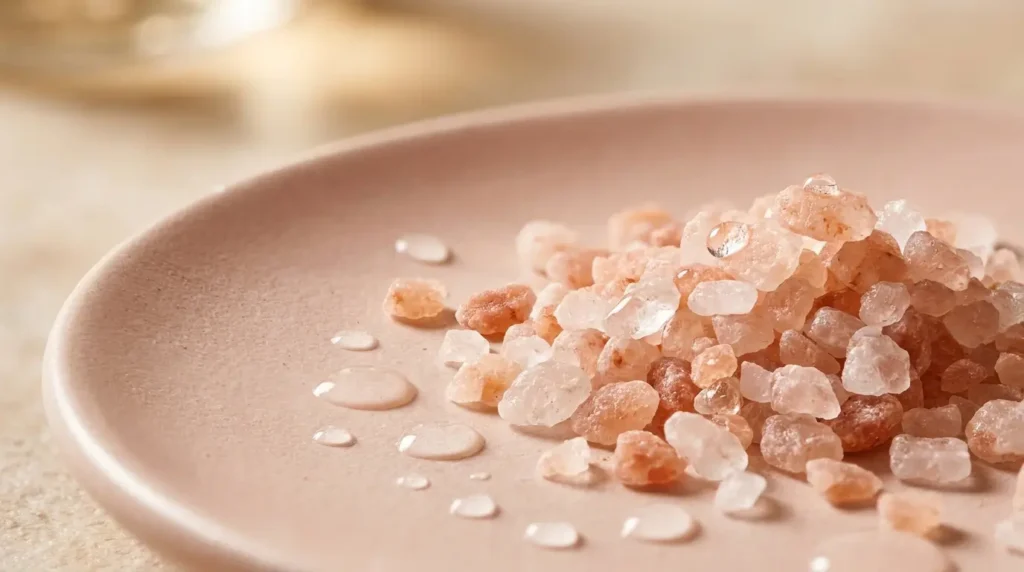
The pink salt trick isn’t pure hype — there are real physiological mechanisms behind it. But they’re more modest, and more specific, than “salt melts fat.”
Sodium-Potassium Balance and Hydration
Your cells manage fluid balance through the relationship between sodium (mostly outside your cells) and potassium (mostly inside them). Eating a lot of processed food — high in sodium, low in potassium — can throw that ratio off, leading to water retention and, in some people, sensations that feel a lot like hunger.
Himalayan pink salt is still overwhelmingly sodium chloride, so its trace potassium and magnesium only nudge that ratio rather than transform it. The bigger factor is much simpler: drinking 12–16 oz of water first thing in the morning, when most people are mildly dehydrated after a night without fluids. Research published in the Journal of the Academy of Nutrition and Dietetics (2016) found that adults who drank about 500 ml of water before meals ate meaningfully fewer calories over time than those who didn’t. The pink salt drink is essentially a built-in way to make that pre-meal habit stick.
True Thirst vs. False Hunger
Mild dehydration and hunger can feel remarkably similar, and it’s genuinely common to reach for food when what your body actually needs is fluid. Replacing sodium and a little magnesium alongside that fluid first thing in the morning may help reduce those false hunger signals over the hours that follow.
This is the core evidence-based mechanism here — not fat-burning, but clearer hunger signaling. That’s a smaller claim than TikTok tends to make, but it’s a meaningful one.
Lemon Juice’s Role: Pectin and Vitamin C
Lemon juice isn’t just flavor. Lemons contain pectin, a soluble fiber that forms a light gel in the stomach and is associated with a modest sense of fullness. One tablespoon isn’t a large dose, but taken right before breakfast, it adds one more small layer to the drink’s overall satiety effect.
Lemon juice also supplies vitamin C, which plays a supporting role in fat oxidation during exercise. A 2005 study in the Journal of the American College of Nutrition found that people with adequate vitamin C status oxidized meaningfully more fat during moderate exercise than those with low vitamin C levels. It’s a co-factor, not a mechanism that works on its own — but it’s a real one.
The Morning Ritual Effect
Don’t discount this one. One of the most consistent predictors of long-term weight management is behavioral consistency — showing up for the same healthy action at the same time, day after day. Behavioral researchers call this an “implementation intention” effect: people who open their day with one defined, deliberate health behavior tend to make better choices through the rest of the day, too.
The pink salt drink may do as much work as a keystone habit as it does as a physiological one. That’s not a knock on it — habits that actually stick are worth a lot.
When and How to Drink It for Best Results
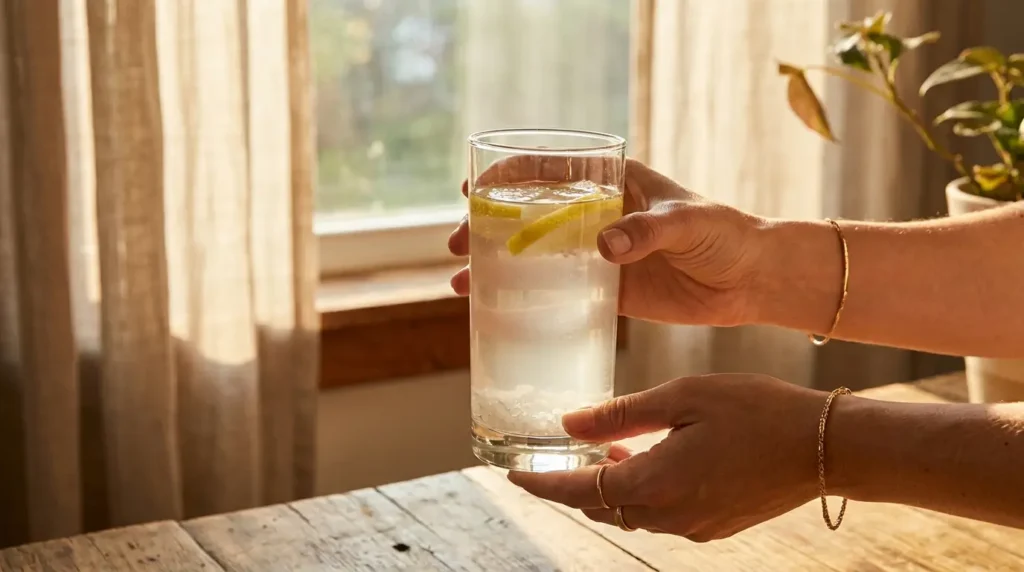
Timing matters more than most recipe posts let on.
Best window: 20–30 minutes before breakfast, on an empty stomach. This gives the water time to hydrate you before food arrives, lets the lemon’s pectin start forming its gel, and means the electrolytes aren’t competing with a meal for absorption.
Go easy on the coffee timing: caffeine is a mild diuretic, which can work against the hydration benefit. If you’re a coffee drinker, have the pink salt drink first, then wait 15–20 minutes before your cup.
Skip it at night: the sodium content is modest, but in sodium-sensitive people it can still disrupt sleep when consumed close to bedtime. This is a morning routine, not an evening one.
Consistency beats precision. Drinking it most days at roughly the same time will do more for you than drinking it at the theoretically perfect moment only once in a while.
Does the Pink Salt Trick Actually Work for Weight Loss?
To be precise about it: this is a useful supporting habit, not a standalone fat-loss method.
Here’s what the evidence actually supports:
- ✅ Improved morning hydration — well-supported; mild dehydration is a real, common barrier to feeling and functioning well.
- ✅ Reduced false-hunger signals — supported by research on how easily thirst and hunger get confused.
- ✅ Modest pre-meal satiety — supported by pre-loading and pectin research.
- ✅ A behavioral anchor — supported by habit-formation research.
- ✅ Electrolyte support during a calorie deficit — genuinely relevant if you’re eating less than usual, since that depletes electrolytes faster.
And here’s what it doesn’t:
- ❌ Direct fat burning — there’s no credible mechanism by which pink salt “melts” fat. That part is TikTok hyperbole.
- ❌ Meaningful calorie reduction on its own — it works alongside a calorie deficit, not instead of one.
- ❌ Anything close to GLP-1 medications — it isn’t in the same category, and shouldn’t be marketed as if it were.
Think of this drink the way you’d think of other modestly-evidenced viral trends, like the gelatin “jello trick”: the mechanism behind it is real, but individually modest. Stacked daily inside an otherwise reasonable eating pattern, the effect compounds — and for a lot of people, the ritual itself is what keeps them consistent.
Recipe Variations Worth Trying
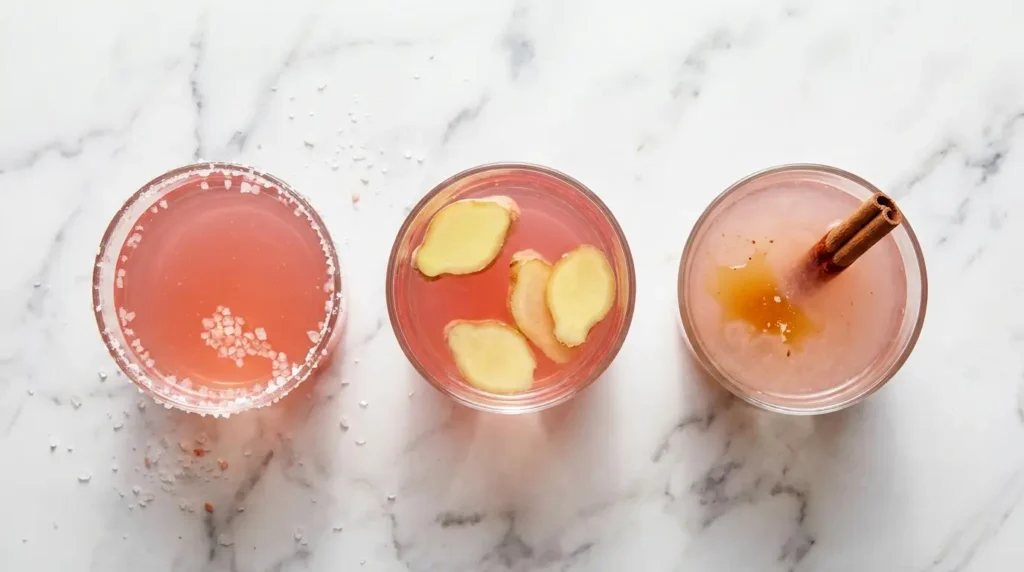
Once you’ve got the base recipe down, here are a few tweaks worth trying:
The Korean Version (Potassium-Boosted)
Add ⅛ teaspoon of cream of tartar to the base recipe. This is the version most people actually mean by the “Korean pink salt trick,” and it gives a more complete electrolyte profile — the cream of tartar adds roughly 140 mg of potassium, moving the sodium-to-potassium ratio closer to what’s generally considered a healthier balance.
The Ginger Version
Add ½ teaspoon of freshly grated ginger, or ¼ teaspoon of ginger powder. Ginger has documented mild thermogenic properties — it can slightly raise body temperature and metabolic rate — and it makes the drink noticeably more pleasant to sip.
The Apple Cider Vinegar Stack
Add 1 teaspoon of raw, unfiltered apple cider vinegar. This pairs the electrolyte-hydration effect of the pink salt with ACV’s better-documented effect on post-meal blood sugar. It’s a stronger flavor, but the combination makes physiological sense. Always dilute ACV in at least 8 oz of water to protect your enamel — for more on getting the dose and timing right, see our guide to the best time to drink apple cider vinegar.
The Mineral Water Base
Swap the plain water for sparkling mineral water. The carbonation makes it easier to drink, and naturally mineral-rich waters — like San Pellegrino or Gerolsteiner — add a little more calcium and magnesium on top of what the pink salt already provides.
Safety: Who Should Be Careful
The pink salt trick is safe for most healthy adults. A few groups should approach it differently.
Blood Pressure
Each serving contains roughly 130–180 mg of sodium — under 8% of the FDA’s recommended daily limit of 2,300 mg for most adults. That’s a small contribution for most people. But if you have diagnosed hypertension, follow a doctor-prescribed low-sodium diet, or take ACE inhibitors or diuretics, talk to your physician before adding any extra sodium to your routine, however small the amount.
Kidney Conditions
If you have kidney disease or reduced kidney function, get medical sign-off before adding this drink — both the sodium and, if you use cream of tartar, the potassium. Impaired kidneys don’t handle electrolyte loads the way healthy ones do.
Tooth Enamel
Lemon juice is acidic (around pH 2.5). Drinking it through a straw and waiting about 30 minutes before brushing your teeth meaningfully cuts enamel risk. Don’t brush immediately after.
Pregnancy
The base recipe is generally considered fine during pregnancy, but if you’re pregnant — especially if you’re dealing with morning sickness or pregnancy-related blood pressure changes — run the lemon and mineral quantities by your OB-GYN first.
The Sodium Ceiling
Resist the urge to add more salt for a bigger effect. Some versions circulating online call for ¼ to ½ teaspoon of pink salt per glass — ½ teaspoon alone contains roughly 1,150 mg of sodium, nearly half the daily recommended limit in a single drink. Stick to ⅛ teaspoon unless a healthcare provider tells you otherwise.
Frequently Asked Questions
Mostly hydration, and that’s the honest answer. Pink salt in water supports cellular hydration and electrolyte balance, which can reduce the false hunger signals that come from mild dehydration. Any weight-related benefit runs through that pathway — not through any direct fat-burning property of the salt itself.
Once daily, first thing in the morning, is the version most aligned with the pre-meal hydration research, and it keeps your added sodium minimal. Drinking it several times a day adds up your sodium intake quickly for very little extra benefit.
Both are overwhelmingly sodium chloride, with nearly identical sodium content per teaspoon. Himalayan pink salt is often described as containing dozens of trace minerals — including potassium, magnesium, calcium, and iron — that are processed out of refined table salt. Those trace minerals are the reason this recipe specifies pink salt, even though the sodium math is nearly the same either way.
Give it 1–2 weeks of daily use, alongside an actual calorie deficit, before expecting a consistent change in morning hunger or bloating. The drink doesn’t produce results on its own — it’s one lever inside a broader approach to weight management.
Yes, for up to 24 hours in a sealed glass container in the fridge, though it tastes best fresh — the lemon flavor fades a bit after refrigeration. Don’t batch it for several days at once; the citric acid in lemon juice breaks down over time.
Not quite, though they overlap. Homemade “Mounjaro” or natural-Ozempic style drinks typically add apple cider vinegar, ginger, and other ingredients marketed as natural GLP-1 activators on top of a pink-salt-and-lemon base. If you’re curious how those claims hold up, our honest look at the “Brazilian Mounjaro” trend and other natural Ozempic-style drinks covers it directly. The pink salt trick on its own is simpler, and its individual mechanisms are better studied.
The Bottom Line
The pink salt trick is one of the more sensible viral wellness trends to come out of TikTok, precisely because the mechanism behind it is real: strategic morning hydration with a small amount of electrolytes can genuinely ease false hunger signals and support better fluid balance. What it doesn’t do is burn fat. Any version of this trend that promises that is overselling it.
Made right — ⅛ teaspoon pink salt, 1 tablespoon lemon juice, 12–16 oz water, 20 minutes before breakfast, most days of the week — it’s a reasonable, low-risk habit to add to an otherwise solid routine. It’s not a substitute for one.
If you want to see how this trend stacks up against the dozens of others circulating right now, our honest ranking of viral weight-loss drinks in 2026 breaks each one down by what the evidence actually supports.
Always check with a healthcare provider before making significant changes to your diet, especially if you have high blood pressure, kidney disease, or take prescription medication.