

Apple cider vinegar shows up everywhere in weight-loss content right now — TikTok, wellness newsletters, the daily routines of people who swear it’s the missing piece. Buried under all of that is a fair question: does it actually matter when you drink it?
The honest answer is yes, but not in the dramatic way most ACV content implies. The timing window with real clinical evidence behind it isn’t the popular fasted-morning shot — it’s roughly 15 to 30 minutes before your biggest, most carbohydrate-heavy meal of the day. Below, we’ll walk through why that window wins, what the research actually shows about morning and bedtime use, and exactly how to dose and dilute ACV so it doesn’t damage your teeth or throat along the way.
Consider this the complete guide to ACV timing, with links throughout to the deeper dives — exact safe dosages, the full side-effect list, and the belly-fat claim — if you want to go further on any one piece. And since ACV is only one of dozens of drinks currently going viral for weight loss, if you want that same evidence-first treatment applied across the board, our honest look at which viral weight-loss drinks actually work covers the rest of them.
Why Timing Matters: How Apple Cider Vinegar Actually Works
Before getting into windows and clocks, it helps to know what you’re actually trying to optimize for. The active compound in apple cider vinegar is acetic acid, which makes up roughly 4–8% of the liquid. A modest but genuine body of clinical research points to a few overlapping ways it may support weight loss.
Blood sugar regulation is the best-supported mechanism. A 2004 study in Diabetes Care found that drinking vinegar before a high-carbohydrate meal reduced post-meal blood glucose by 19–34% in people with insulin resistance. Acetic acid appears to slow gastric emptying — how quickly food leaves your stomach — so carbohydrates enter your bloodstream more gradually and trigger a smaller insulin spike, the kind of spike that promotes fat storage.
Appetite and satiety benefit from that same slowed digestion. A 2005 study in the European Journal of Clinical Nutrition found that people who had vinegar with a starchy meal ate 200–275 fewer calories over the rest of that day, without consciously trying to eat less.
Fat metabolism is the least certain of the three. Most of the supporting data comes from animal studies showing acetic acid can influence genes involved in fat storage and burning. But a 12-week randomized trial in Bioscience, Biotechnology, and Biochemistry (2009) found that people drinking 1–2 tablespoons of vinegar daily lost more body weight, visceral fat, and waist circumference than a placebo group, with no other changes to their diet.
Put together, ACV’s real mechanism runs through blood sugar and appetite — which is exactly why timing isn’t just a ritual detail. For acetic acid to do its job, it needs to be in your system around the same time as carbohydrates. That single fact shapes every recommendation below.
The Three ACV Timing Windows, Ranked by the Evidence
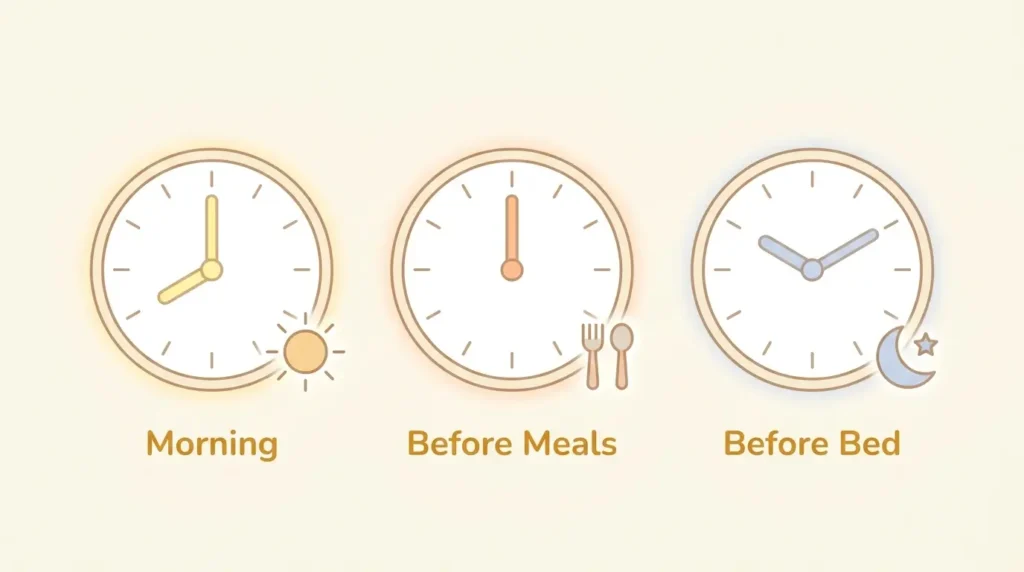
Before Meals: The Strongest Evidence Window
If you want the timing with the most direct research behind it, this is it. Drinking ACV 15–30 minutes before a carbohydrate-containing meal lines up almost exactly with how the supporting studies were actually run.
The Diabetes Care trial used two tablespoons of vinegar roughly two minutes before a meal. The European Journal of Clinical Nutrition satiety study had participants drink vinegar alongside bread. In nearly every study that found a meaningful blood sugar effect, the vinegar was taken close to food — not hours before or after it.
The physiology explains why: acetic acid needs to be present in your stomach and small intestine while carbohydrates are being digested. It appears to partially inhibit digestive enzymes — salivary amylase and the enzyme sucrase — that break complex carbs down into sugar. Slow the enzyme, slow the glucose entering your bloodstream.
Practically, that means timing your dose around your carb-heaviest meal — pasta, rice, bread, a sandwich — rather than every single meal of the day. Even one or two pre-meal doses, done consistently, is what the underlying research is actually built on. It’s also the easiest window on your stomach, since food follows quickly and buffers the acidity. A glass of 1–2 tablespoons of ACV in 8 oz of water, with a squeeze of lemon if you’d like, is enough.
Morning on an Empty Stomach: The Easiest Habit to Keep
This is the version most people picture when they hear “ACV for weight loss” — a diluted shot first thing, before breakfast. It’s popular for good reason, but it’s worth separating what the evidence actually supports from what’s simply assumed.
No clinical trial has directly compared a fasted-morning dose against the other timing windows. The most positive weight-loss data — that 2009 Japanese trial — had participants take ACV with meals, not on an empty stomach, and the blood-sugar research consistently shows vinegar working in the presence of carbohydrates, which a fasted dose doesn’t provide.
That doesn’t make the morning window pointless. It has real, if more indirect, advantages:
- Consistency. The biggest predictor of results with ACV isn’t precise timing — it’s whether you actually do it every day. If mornings are the only time you’ll reliably remember, that wins.
- Digestive priming. Acidic drinks first thing may stimulate stomach acid production, which some clinicians note can support protein digestion at breakfast.
- A possible insulin-sensitizing effect, even without food present, though this is based on early research and needs more human data to confirm.
If you go this route, eat within 20–30 minutes of your dose. Drinking it on a genuinely empty stomach for hours at a stretch raises your odds of nausea and stomach discomfort, especially in the first couple of weeks.
Before Bed: The Weakest Case, and Some Real Risks
The “bedtime ACV” trend usually gets framed around stabilizing overnight blood sugar and waking up to a lower fasting glucose reading — and there’s a specific, if narrow, study behind that claim.
A 2007 study in Diabetes Care (a different paper from the 2004 pre-meal trial above) tested two tablespoons of vinegar before bed in adults with well-controlled type 2 diabetes or pre-diabetes. Waking fasting glucose dropped 4–6% compared to a control group, with researchers theorizing that acetic acid may reduce how much glucose the liver releases overnight.
Chronically elevated fasting blood sugar is linked to greater fat storage over time, so if bedtime ACV genuinely lowers it for some people, a modest weight-related benefit is plausible. But the caveats matter:
- The study population was specifically diabetic or pre-diabetic — the effect in generally healthy, simply overweight adults may be smaller or absent.
- Lying down soon after something acidic raises your risk of acid reflux and esophageal irritation. If you have any history of GERD or heartburn, skip this window entirely.
- Enamel risk is also higher at night, when saliva production — your mouth’s natural acid buffer — drops.
For most people, this is the weakest of the three windows. If your specific goal is fasting blood sugar and your doctor is on board with experimenting, keep the dose small (1 teaspoon to 1 tablespoon), dilute heavily (at least 10–12 oz of water), drink it a full 30 minutes before lying down, and rinse your mouth with plain water afterward.
So, What’s the Single Best Time to Drink ACV?

Ranked by the strength of the evidence behind each window:
- Before meals (15–30 minutes prior) — the strongest evidence, and the closest match to how these studies were actually conducted.
- Morning on an empty stomach — a reasonable second choice, mainly because it’s the easiest habit to sustain, even though the mechanism is more indirect.
- Before bed — the weakest case for most people, worth considering only if fasting glucose is a specific, doctor-discussed concern and reflux isn’t an issue.
For most people, the best time to drink apple cider vinegar for weight loss is 15–30 minutes before your largest or most carbohydrate-heavy meal of the day. If that’s dinner, drink it before dinner. If it’s lunch, drink it before lunch. And if mornings are genuinely the only time you’ll stick with it, that’s a reasonable trade-off — the research suggests consistency matters more than precision.
If you’re weighing specifically between a morning ritual and a nighttime dose — setting the pre-meal option aside — we’ve put morning versus nighttime ACV head-to-head in a dedicated comparison.
The Right Dose — and How to Dilute It Safely
The dose behind the weight-related findings above is 1–2 tablespoons (15–30 mL) of apple cider vinegar per day. That’s the range worth aiming for — more isn’t better. Doses above 2 tablespoons a day raise the risk of digestive irritation and the other issues covered in the next section, without any evidence of added benefit.
Dilution isn’t optional. Undiluted ACV has a pH of roughly 2–3 — acidic enough to damage tooth enamel and irritate the esophagus and stomach lining over the kind of daily, months-long use that weight-loss goals require.
| Goal | ACV Amount | Water | Optional Add-Ins |
|---|---|---|---|
| Starter dose (Week 1–2) | 1 tsp (5 mL) | 10–12 oz | Honey, lemon |
| Standard dose | 1 tbsp (15 mL) | 8–10 oz | Lemon, cinnamon, ginger |
| Maximum dose | 2 tbsp (30 mL) | 12–16 oz | Honey, lemon, pink salt |
| Before-bed dose | 1 tsp (5 mL) | 12 oz | Honey only (gentle) |
Use raw, unfiltered ACV — the kind that still contains “the mother,” the cloudy, strand-like sediment visible at the bottom of quality bottles (Bragg is the most widely available brand in the US). The mother itself doesn’t contain acetic acid, but the research behind ACV’s benefits has generally used whole, unfiltered vinegar rather than the clear, filtered kind meant for salad dressing.
For the complete picture — safe upper limits, how to build your dose up gradually without stomach upset, and how ACV can interact with blood sugar medication — see our full guide to how much apple cider vinegar is actually safe to drink every day.
The Safety Trade-Offs of a Daily ACV Habit

Making ACV a daily habit for weeks or months means small risks add up. Here’s what matters most:
Tooth enamel is the most underappreciated long-term risk. A 2012 case study in General Dentistry documented severe enamel erosion in a 15-year-old who had been drinking ACV daily for weight loss. Protect yourself by always diluting, drinking through a straw, rinsing with plain water right after, and waiting at least 30 minutes before brushing — brushing acid-softened enamel makes erosion worse, not better.
Throat and esophageal irritation shows up as a lingering burning sensation after your dose, which is usually a sign you’re under-diluting. Add more water and/or drop back to 1 teaspoon and build up gradually.
Blood sugar medication interactions are worth flagging with your doctor. ACV has a measurable blood-sugar-lowering effect, so if you take metformin, insulin, or any other blood sugar medication, a daily ACV habit could push levels too low without medical guidance.
Potassium and bone health risks are mostly a concern at higher, longer-term intakes. Case reports link daily use above the 2 tbsp/day range to low potassium and reduced bone density. At 1–2 tbsp/day, this risk is low, but it’s worth knowing if you have kidney disease, take diuretics, or have osteoporosis risk factors.
Who should skip ACV entirely: people with gastroparesis (delayed gastric emptying, which ACV can worsen), anyone with chronic acid reflux or GERD, anyone with an active ulcer or esophagitis, and pregnant women, since the unpasteurized “mother” carries a small bacterial risk.
We go deeper on each of these — plus a few less-common risks — in our full rundown of apple cider vinegar’s possible side effects.
Morning ACV Weight Loss Tonic

This version fits the pre-breakfast window, uses a properly diluted ratio, and takes under two minutes to make.
Prep time: 2 minutes
Calories: ~10–15 kcal
Carbs: 3g | Protein: 0g | Fat: 0g
Serves: 1
Ingredients:
- 1 tablespoon raw apple cider vinegar (with the mother)
- 1 cup (8 oz) warm or room-temperature water — not boiling, since heat destroys the mother’s live cultures
- Juice of ½ lemon (about 1 tablespoon)
- ¼ teaspoon freshly grated ginger, or a pinch of ground ginger
- ½ teaspoon raw honey (optional — adds about 10 calories and softens the taste considerably)
- A small pinch of ground cinnamon (optional)
Instructions:
- Add the apple cider vinegar to your glass or mug first.
- Pour in the warm water and stir briefly to combine.
- Squeeze in the lemon juice, then add the ginger, honey, and cinnamon if using.
- Stir until any honey has fully dissolved.
- Drink through a straw if you can, and rinse your mouth with plain water immediately after.
Best consumed 15–30 minutes before breakfast, or right upon waking if that’s the routine you’ll actually keep.
Pre-meal variation: use cold water, add a fresh lemon slice and a few mint leaves, and serve over ice — a more refreshing version for a before-dinner dose in warmer months.
Notes: If this is your first week, start with 1 teaspoon instead of 1 tablespoon and build up over two weeks. A pinch of pink Himalayan salt is a popular addition for electrolytes, though at this quantity it adds only a trace amount of sodium.
Morning ACV Weight Loss Tonic

A quick, properly diluted apple cider vinegar tonic with lemon, ginger, and a touch of honey — ready in under two minutes and gentle enough for daily use.
- Prep Time: 2 minutes
- Total Time: 2 minutes
- Yield: 1 serving 1x
- Category: Beverage
- Method: No-Cook
- Cuisine: American
- Diet: Gluten Free
Ingredients
- 1 tablespoon raw apple cider vinegar (with the mother)
- 1 cup (8 oz) warm or room-temperature water — not boiling, since heat destroys the mother’s live cultures
- Juice of ½ lemon (about 1 tablespoon)
- ¼ teaspoon freshly grated ginger, or a pinch of ground ginger
- ½ teaspoon raw honey (optional)
- Small pinch of ground cinnamon (optional)
Instructions
- Add the apple cider vinegar to your glass or mug first.
- Pour in the warm water and stir briefly to combine.
- Squeeze in the lemon juice, then add the ginger, honey, and cinnamon if using.
- Stir until any honey has fully dissolved.
- Drink through a straw if you can, and rinse your mouth with plain water immediately after.
Notes
Best consumed 15–30 minutes before breakfast, or right upon waking if that’s the routine you’ll actually keep.
Pre-meal variation: use cold water, add a fresh lemon slice and a few mint leaves, and serve over ice for a refreshing before-dinner version.
If this is your first week, start with 1 teaspoon of ACV instead of 1 tablespoon and build up over two weeks.
Nutrition
- Serving Size: 1 serving
- Calories: 12
- Fat: 0
- Carbohydrates: 3
- Protein: 0
How Long Until You Actually See Results?
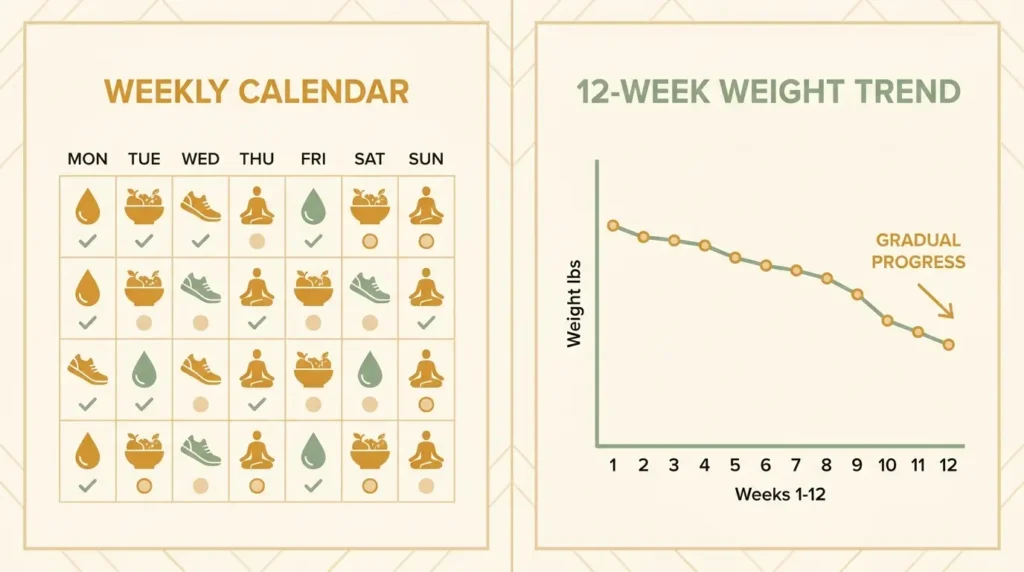
This comes up constantly, and the honest answer is 4–12 weeks of consistent daily use, with what else you’re eating making a real difference.
The most directly applicable data is still that 12-week Japanese trial. The group taking 2 tablespoons a day lost an average of 3.7 lbs and measurably reduced visceral fat; the 1-tablespoon group lost about 2.6 lbs; the placebo group gained slightly. That visceral, or belly, fat reduction is a specific and notable finding — significant enough that we’ve broken down exactly what the studies show about ACV and belly fat on its own.
These are modest numbers, and they matter more as part of a year of consistent use than as a standalone fix. ACV doesn’t replace a calorie deficit — what it appears to do is make one easier to sustain, by smoothing out the blood sugar swings that drive cravings and by modestly increasing fullness after meals. Think of it as a metabolic support tool, not a fat burner.
Frequently Asked Questions
Before — by about 15 to 30 minutes — is the timing with the strongest research behind it. Taken ahead of a carbohydrate-containing meal, ACV appears to blunt the resulting blood sugar spike and may modestly reduce how much you eat at that meal. After eating, the same mechanism has less to work with, since digestion is already underway.
Less than you’d think. The research behind ACV’s benefits is built on daily consistency over weeks, not split-second timing. If your usual pre-dinner window doesn’t work on a given day, taking it whenever you remember still beats skipping it — just try to keep it paired with food rather than sipping it alone for hours.
Yes — unsweetened juice, lemon water, and herbal tea all work fine as a base. Just keep in mind that a sugary juice works against the blood-sugar benefit you’re going for; if you want juice for flavor, a small amount of unsweetened cranberry or pomegranate is a better choice than something sweetened.
Yes. Use raw, unfiltered vinegar that still contains “the mother” — the cloudy sediment visible in quality bottles. Filtered, clear vinegar, the kind meant for salad dressing, has had that removed, and most of the research behind ACV’s benefits used the unfiltered version. Give the bottle a shake before pouring, since the mother settles over time.
The Bottom Line
Apple cider vinegar is one of the more genuinely evidence-backed drinks in the weight-loss space — not a miracle, but a real metabolic support tool when it’s used correctly. The best-supported answer to “when should I drink it” is 15–30 minutes before your largest, most carbohydrate-heavy meal of the day. Morning use is a solid second choice, mainly because it’s the easiest habit to actually keep.
Whichever window you choose, the fundamentals don’t change: dilute to at least 1 tablespoon per 8 oz of water, drink it through a straw, rinse your mouth afterward, and start smaller if you’re new to it. ACV also works best as one piece of a broader routine rather than a solo fix — if you’re rounding that out with something besides vinegar, a dozen infused water recipes and what the evidence actually shows is a good complementary place to look.
Medically reviewed for accuracy. Always consult your healthcare provider before starting any supplement or dietary routine, particularly if you take medication for blood sugar or blood pressure, or have a history of gastrointestinal issues.
Sources:
- Johnston, C.S., et al. (2004). “Vinegar Improves Insulin Sensitivity to a High-Carbohydrate Meal in Subjects With Insulin Resistance or Type 2 Diabetes.” Diabetes Care.
- Östman, E., et al. (2005). “Vinegar supplementation lowers glucose and insulin responses and increases satiety after a bread meal in healthy subjects.” European Journal of Clinical Nutrition.
- Kondo, T., et al. (2009). “Vinegar intake reduces body weight, body fat mass, and serum triglyceride levels in obese Japanese subjects.” Bioscience, Biotechnology, and Biochemistry.
- White, A.M., Johnston, C.S. (2007). “Vinegar Ingestion at Bedtime Moderates Waking Glucose Concentrations in Adults With Well-Controlled Type 2 Diabetes.” Diabetes Care.