

If you’ve spent any time on TikTok or Instagram over the past two years, there’s a good chance you’ve scrolled past someone blending a chalky, oat-colored drink and claiming it melted pounds off their body — without the four-figure monthly cost of a prescription injection. That drink is oatzempic, and by 2025 it had become one of the most-searched DIY “weight loss” drinks online.
Let’s clear something up immediately: oatzempic is not a medication. It contains no semaglutide, no tirzepatide, and nothing that works the way an injectable GLP-1 drug like Ozempic or Mounjaro works, so drinking it will not come close to reproducing the results seen in semaglutide clinical trials. What oatzempic actually is: a blended oat drink built around a well-studied type of fiber called beta-glucan, which can genuinely help you feel fuller for a few hours and soften a blood sugar spike. That’s a real, if modest, benefit — just a completely different one than the name suggests. Below, we cover the exact recipe, the actual science behind it, an honest pros-and-cons breakdown, who should be cautious with it, and exactly how it compares to real Ozempic.
What Is Oatzempic, Actually?
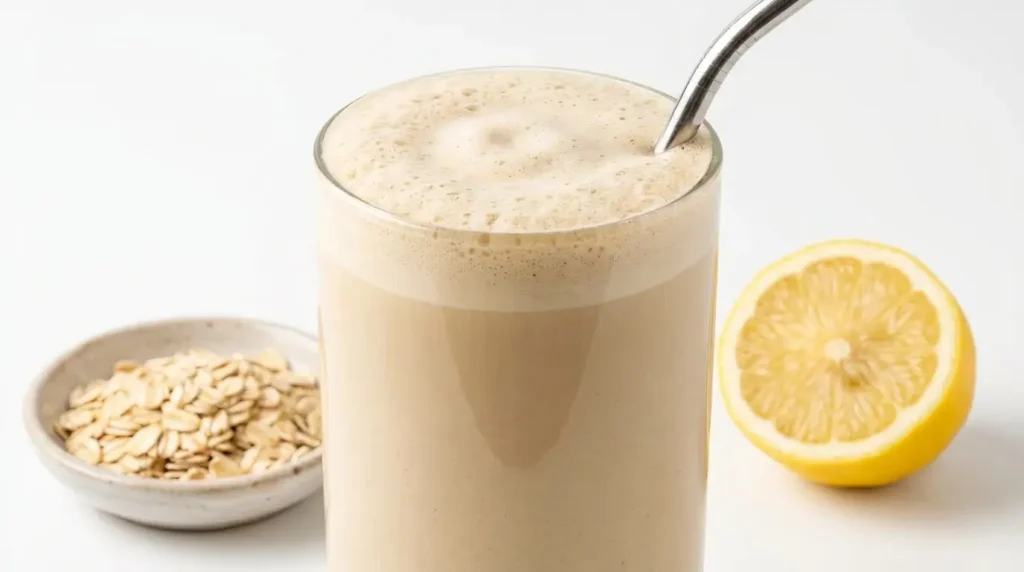
Oatzempic is a blended drink made from rolled oats, cold water, and fresh lemon juice, with cinnamon or a pinch of salt as popular optional add-ins. The name mashes together “oats” and “Ozempic” — the brand name for injectable semaglutide, a drug originally developed for type 2 diabetes that has since become widely used, and famously hard to get, for weight loss.
The trend took off on TikTok in early 2024, with creators claiming the drink mimicked the appetite-suppressing effects of GLP-1 receptor agonists like Ozempic and Mounjaro — at a cost of roughly $0.30 a serving instead of $900 or more a month for the medication. The #oatzempic hashtag has since racked up hundreds of millions of views, and “oatzempic recipe” became a heavily searched term as people looked for the exact formula.
To repeat: none of that means oatzempic and Ozempic work the same way, or anywhere close to it. But the drink isn’t nutritionally empty, either. It’s built around a fiber with genuine, peer-reviewed research behind it for satiety and blood sugar control. Here’s the recipe first, then a closer look at why it works the way it does.
The Original Oatzempic Recipe
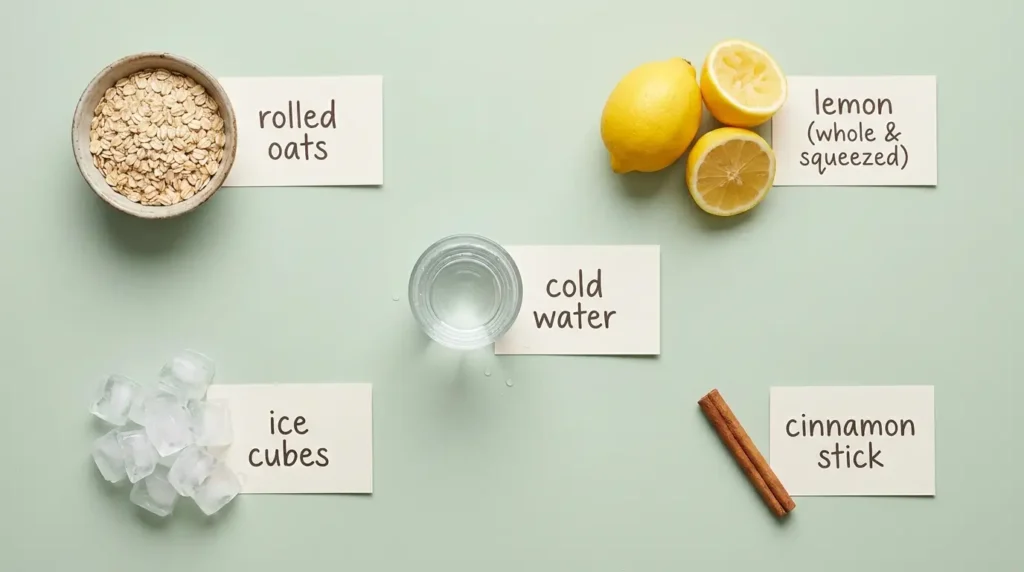
This is the base version that went viral: five ingredients, no cooking required, about 16 ounces of finished drink, and roughly five minutes of total effort.
Original Oatzempic Drink
Prep time: 5 minutes | Serves: 1 | Nutrition (approximate): ~130 kcal · 4g protein · 25g carbs · 3g fiber · 2g fat · 1g sugar
Ingredients
- ½ cup (40g) old-fashioned rolled oats (not instant)
- 1 cup (240ml) cold water
- 1 tablespoon fresh lemon juice (about half a lemon)
- ½ cup ice, optional, for a colder, thicker drink
- A pinch of cinnamon, optional but recommended
Instructions
- Add the oats and water to a blender. Use old-fashioned rolled oats rather than instant oats or oat flour — the coarser texture blends into a better consistency and preserves more of the intact beta-glucan fiber.
- Add the lemon juice and cinnamon, if using. The lemon isn’t just for flavor: its acidity slightly slows starch digestion, which softens the blood sugar spike that follows.
- Blend on high for 45–60 seconds, until completely smooth with no visible oat flecks.
- For a thicker, smoothie-like texture, add the ice and blend for another 10–15 seconds.
- Drink it right away. Oatzempic thickens quickly as the beta-glucan absorbs liquid — if it sits too long and gets too thick, stir in a splash of water.
Tips for Best Results
- Use cold or refrigerated water. Room-temperature water tends to make the texture gluey.
- Stick with rolled oats. Steel-cut oats don’t fully break down in a home blender and leave a gritty texture.
- Rinse the blender immediately after use — oat residue dries into something close to cement within minutes.
Original Oatzempic Drink
A 5-minute, 5-ingredient blended oat drink built around beta-glucan fiber for real, if modest, satiety and blood sugar support. This is the honest, non-pharmaceutical take on the viral oatzempic trend — no semaglutide, just oats.
- Prep Time: 5
- Total Time: 5
- Yield: 1 serving 1x
- Category: Breakfast
- Method: Blending
- Cuisine: American
- Diet: Vegan
Ingredients
- ½ cup (40g) old-fashioned rolled oats (not instant)
- 1 cup (240ml) cold water
- 1 tablespoon fresh lemon juice (about half a lemon)
- ½ cup ice, optional, for a colder, thicker drink
- A pinch of cinnamon, optional but recommended
Instructions
- Add the oats and water to a blender. Use old-fashioned rolled oats rather than instant oats or oat flour — the coarser texture blends into a better consistency and preserves more of the intact beta-glucan fiber.
- Add the lemon juice and cinnamon, if using. The lemon’s acidity slightly slows starch digestion, which softens the blood sugar spike that follows.
- Blend on high for 45–60 seconds, until completely smooth with no visible oat flecks.
- For a thicker, smoothie-like texture, add the ice and blend for another 10–15 seconds.
- Drink it right away. Oatzempic thickens quickly as the beta-glucan absorbs liquid — if it sits too long and gets too thick, stir in a splash of water.
Notes
- Use cold or refrigerated water — room-temperature water tends to make the texture gluey.
- Stick with rolled oats; steel-cut oats don’t fully break down in a home blender and leave a gritty texture.
- Rinse the blender immediately after use — oat residue dries into something close to cement within minutes.
- This is a high-fiber breakfast drink, not a medication — it isn’t a substitute for Ozempic or any GLP-1 prescription.
Nutrition
- Serving Size: About 16 oz (1 drink)
- Calories: 130
- Sugar: 1
- Fat: 2
- Carbohydrates: 25
- Fiber: 3
- Protein: 4
The Real Science Behind Oatzempic
There’s an actual biochemical logic to this recipe, even though the viral videos rarely explain it.
Rolled Oats and Beta-Glucan
The ingredient doing most of the work here is beta-glucan, a soluble fiber found in unusually high concentrations in oats. Once it reaches your digestive tract, beta-glucan absorbs liquid and turns into a thick gel — and that gel affects your body in three specific ways:
- It slows gastric emptying. Food, including the drink itself, stays in your stomach longer, which extends the feeling of fullness.
- It blunts your glycemic response. Slower digestion means less of the blood-sugar spike-and-crash pattern that tends to trigger hunger again within the hour.
- It mildly stimulates your own GLP-1 release. This is the one place the “oatzempic” name has a shred of scientific basis. Several studies have found that oat beta-glucan prompts your gut to release more of its own GLP-1 — the same hormone semaglutide imitates synthetically. The effect is nowhere near as strong as an injectable drug, but it’s genuinely the same pathway.
A 2016 meta-analysis in The American Journal of Clinical Nutrition found that eating at least 3 grams of beta-glucan daily was linked to meaningfully higher post-meal fullness scores. Half a cup of rolled oats supplies roughly 2–3 grams of beta-glucan — right around that threshold.
What Lemon Juice Actually Does
Lemon juice contributes vitamin C and citric acid. Its acidity moderately reduces amylase activity — the enzyme that breaks starch down into sugar — which slightly lowers the glycemic impact of the oats. It also makes the drink taste like something you’d actually want to finish, which matters more for long-term consistency than any single nutrient does.
Why Cinnamon Earns Its Spot
Ceylon cinnamon specifically (not the cassia cinnamon most grocery stores stock by default) contains compounds — including cinnamaldehyde and methylhydroxychalcone — that small studies have linked to improved insulin sensitivity and a further softening of post-meal glucose spikes. A half-teaspoon adds next to no calories for a genuine, if modest, metabolic upside.
Does Oatzempic Actually Work for Weight Loss?
The honest answer depends entirely on what you’re comparing it to.
Versus real Ozempic or Mounjaro: Not even close. Injectable semaglutide produced an average weight loss of 12–15% of body weight over 68 weeks in clinical trials. A blended oat drink cannot replicate that — nothing about its mechanism operates anywhere near that intensity. Anyone telling you otherwise is either misinformed or selling you something.
Versus a typical high-calorie breakfast: This is where it gets more interesting. If oatzempic replaces a heavier morning meal and genuinely curbs your appetite for a few hours, the resulting calorie deficit — sustained over weeks — can add up to real weight loss. That’s the actual mechanism at work: not pharmaceutical-grade appetite suppression, but a low-calorie, high-fiber breakfast substitute with a reasonable window of fullness.
Several small studies on high-fiber, oat-based breakfasts back this up: people who eat beta-glucan-rich breakfasts tend to eat 15–20% fewer calories at their next meal than people who eat low-fiber equivalents. Kept up consistently, that’s a meaningful daily deficit.
Put simply, oatzempic works about as well as any high-fiber, low-calorie breakfast — because that’s exactly what it is. The name is the marketing. The fiber is the substance.
An Honest Assessment: What a Dietitian Would Tell You
The following reflects the kind of general clinical guidance registered dietitians commonly apply to high-fiber liquid diets and viral food trends. It isn’t personalized medical advice — talk to your own doctor or dietitian if you’re managing a health condition.
What’s genuinely good about it:
- It’s made from whole-food ingredients, with no synthetic additives, artificial sweeteners, or unlabeled proprietary blends.
- The fiber content is real, and the satiety effect is physiologically plausible rather than invented.
- At around 130 calories, it’s a genuinely low-calorie option that still delivers meaningful fiber and a bit of protein.
- It’s cheap, fast, and simple — three things that matter more for actually sticking with a habit than almost anything else.
Where it falls short:
- Protein is thin. Half a cup of oats provides only 4–5 grams of protein. Most adults need closer to 20–25 grams in a breakfast-replacement drink for lasting fullness and to help protect muscle mass — especially if you strength train or are over 50.
- 130 calories often isn’t enough as a full meal. If it leaves you starving by 9 a.m., you’re likely to overeat later in the day and cancel out any deficit it created.
- The name sets up unrealistic expectations. Ozempic produces dramatic, medically monitored weight loss. Four weeks of oatzempic without losing twenty pounds can feel like failure, and that frustration sometimes leads people to abandon genuinely useful habits altogether.
- Blending raises the glycemic index slightly compared to eating whole cooked oats, since blending breaks down some of the structure that normally slows digestion. This is minor for most people, but worth knowing if you track blood sugar closely.
Who Should Be Cautious With Oatzempic
The ingredients here are safe for most healthy adults, but a few groups should modify the recipe or skip it altogether:
- Celiac disease or gluten sensitivity: Oats are naturally gluten-free, but they’re frequently cross-contaminated with wheat during processing. Use certified gluten-free oats if you have any gluten-related condition, and check with your doctor regardless — some people with celiac disease also react to avenin, the protein naturally found in oats.
- Irritable bowel syndrome (IBS): Oats are low-FODMAP in small servings, but half a cup blended into a drink and consumed all at once can trigger bloating, gas, or cramping in people sensitive to fermentable fiber. Start with a quarter cup and see how you tolerate it.
- Anyone on certain daily medications: Soluble fiber can slow the absorption of some oral medications, including certain statins, levothyroxine (thyroid medication), and some diabetes drugs. If you take a morning medication, leave at least an hour between your dose and your drink, and check with your pharmacist if you’re unsure.
- Anyone managing blood sugar with insulin or insulin-stimulating medication: Oats have a moderate glycemic index on their own, but drinking them blended, without any accompanying protein or fat, may raise blood sugar faster than expected. Monitor closely, especially the first few times.
- Pregnant or breastfeeding: Plain oats are considered safe during pregnancy. The real caution here is about framing rather than the ingredients — any intentional weight-loss effort during pregnancy should only happen under a doctor’s supervision.
3 Ways to Upgrade the Recipe
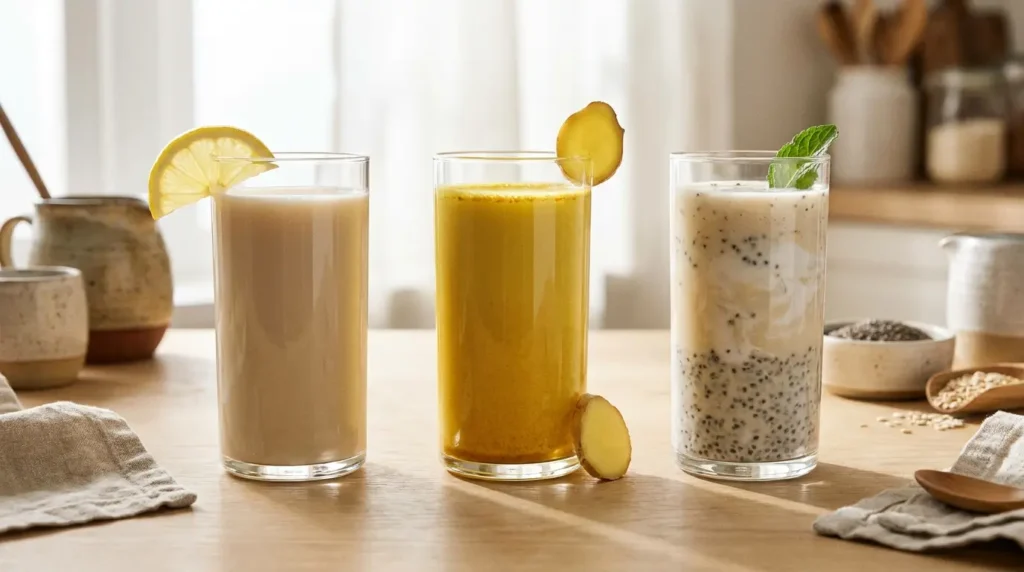
The base recipe is a reasonable starting point, but it has real gaps — protein chief among them. These three variations close those gaps without making the drink any harder to actually finish.
Variation 1: High-Protein Oatzempic
Best for: active people, anyone over 50, or anyone using this as a genuine meal replacement.
Add to the original recipe:
- 1 scoop unflavored or vanilla protein powder, whey or plant-based — adds roughly 20–25g protein
- ½ cup unsweetened almond milk in place of half the water — adds creaminess and about 1g more protein
Approximate macros: 230 kcal · 25g protein · 26g carbs · 4g fiber · 3g fat
This version genuinely functions as a full breakfast rather than a snack — the added protein meaningfully extends fullness and turns a simple fiber drink into a balanced mini-meal.
Variation 2: Anti-Inflammatory Oatzempic (Turmeric & Ginger)
Best for: anyone managing inflammation, joint discomfort, or general digestive sensitivity.
Add to the original recipe:
- ¼ teaspoon ground turmeric
- ¼ teaspoon fresh grated ginger (or ⅛ teaspoon ground ginger)
- A pinch of black pepper — not optional if you want the turmeric to actually do anything, since it meaningfully increases how much curcumin your body absorbs
- ½ teaspoon raw honey, optional, adds about 10 calories
Approximate macros: 140 kcal · 4g protein · 27g carbs · 3.5g fiber · 2g fat
Turmeric and ginger both have real, repeatedly documented anti-inflammatory effects in human studies — curcumin from turmeric and gingerols from ginger. This version also tastes noticeably better than the plain original: warm, earthy, and a little spiced.
Variation 3: Gut-Health Oatzempic (Kefir Base)
Best for: anyone prioritizing gut health alongside weight management.
Replace the water with:
- ½ cup plain, low-fat kefir plus ½ cup cold water — this cuts the tang while keeping the probiotics
Optional add-in:
- 1 tablespoon chia seeds — adds about 5g fiber and 2g protein, and thickens the drink noticeably. For more on chia specifically, see our breakdown of chia seed water and the “internal shower” trend.
Approximate macros: 185 kcal · 8g protein · 28g carbs · 6g fiber · 4g fat
Kefir contributes live probiotic cultures, protein, calcium, and B vitamins. The research on gut bacteria is increasingly consistent on this point: a diverse, fiber-fed microbiome produces short-chain fatty acids that influence both metabolism and the hormones that regulate appetite. This version pairs a prebiotic (beta-glucan from the oats) with a probiotic (the kefir) — what nutritionists sometimes call a synbiotic combination.
When to Drink Oatzempic for Best Effect
Timing genuinely matters for a fiber-forward drink like this one.
Best: 30–45 minutes before your biggest meal of the day. This gives the beta-glucan time to form its gel in your stomach before food arrives, which maximizes both the fullness and blood-sugar-moderating effects.
Second-best: first thing in the morning, on an empty stomach. If oatzempic is standing in for breakfast, drink it right when you wake up — the 3–4 hour fullness window usually carries most people through to a lighter, later lunch.
Least effective: right after a meal. Drinking any satiety-focused beverage after you’ve already eaten misses the window where it could actually reduce how much you eat.
For a broader look at which morning drinks have real evidence behind them, see our full roundup of the best morning drinks for weight loss.
Oatzempic vs. Real Ozempic: The Key Differences
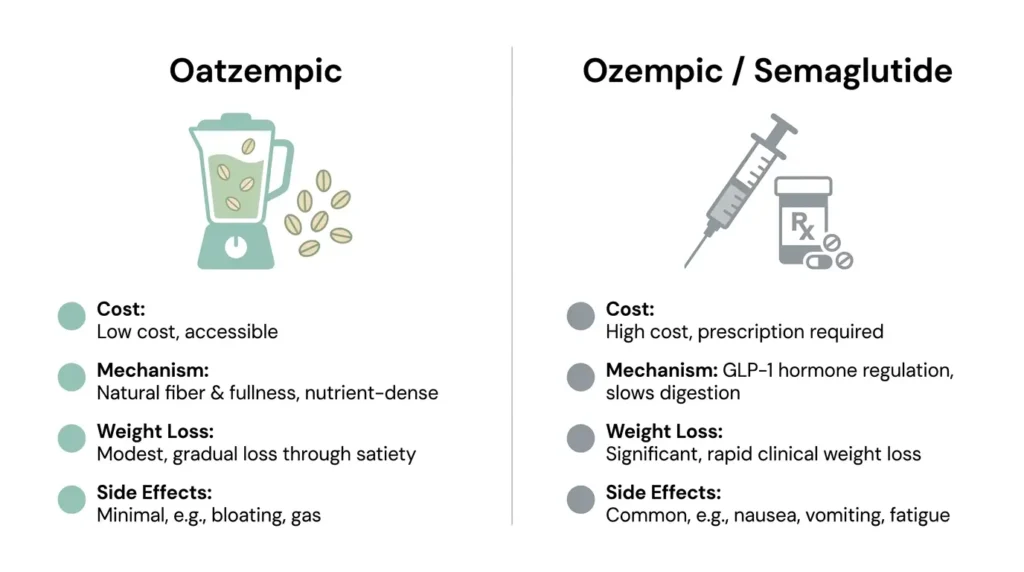
Given how many people search for oatzempic specifically as a stand-in for GLP-1 medication, it’s worth spelling this out plainly.
| Feature | Oatzempic (DIY Drink) | Ozempic / Semaglutide |
|---|---|---|
| Active compound | Beta-glucan (dietary fiber) | Semaglutide (synthetic GLP-1 agonist) |
| Effect on GLP-1 | Mildly stimulates your own GLP-1 production | Directly mimics GLP-1, at far higher concentrations |
| Average weight loss | Highly variable; depends on overall diet | ~12–15% of body weight over 68 weeks in clinical trials |
| Cost per month | Roughly $5–$10 | $900–$1,200 without insurance or manufacturer coupons |
| Prescription required | No | Yes |
| Common side effects | Bloating, gas — especially with IBS | Nausea, vomiting, rare pancreatitis risk |
| Best suited for | Anyone wanting a genuinely higher-fiber breakfast habit | People with type 2 diabetes or obesity-related conditions, under medical supervision |
The practical takeaway: if a doctor has prescribed you Ozempic or Mounjaro, oatzempic is not a substitute for it — it was never going to work at that scale. If you’re a generally healthy adult looking for a free, food-based way to add fiber, feel fuller in the morning, and cut back on mindless snacking, oatzempic is a reasonable tool, as long as you judge it by what it actually is rather than what its name implies. For a closer look at other drinks riding the same wave, see our honest breakdown of “Brazilian Mounjaro” and other natural Ozempic-style drinks.
Frequently Asked Questions
There’s no clinical trial on oatzempic specifically as a drink, so its effect on your weight comes down entirely to your overall calorie balance. If it replaces a higher-calorie breakfast and cuts your daily intake by 200–400 calories, you could reasonably expect to lose somewhere around 1–2 pounds a month from that change alone, assuming the rest of your diet stays consistent.
For most healthy adults, yes. Half a cup of rolled oats a day sits comfortably within typical fiber recommendations and delivers a meaningful dose of beta-glucan without overdoing it. If you notice bloating or excess gas, scale back to a quarter cup, or drink it every other day while your gut adjusts.
You can, but expect a noticeably thicker, denser texture by morning as the beta-glucan keeps absorbing water overnight. Stir in 2–4 tablespoons of water before drinking. Some people actually prefer this version — it ends up closer to overnight oats in liquid form.
Yes. The lemon adds flavor and a small glycemic benefit, but it isn’t essential to the fiber mechanism. Swap in a splash of lime juice, half a teaspoon of apple cider vinegar — which has its own satiety research, covered in our guide to whether ACV timing actually matters — or just leave it out.
Traditional oat water, sometimes used in skincare or as a stomach-soothing remedy, is made by soaking oats and straining out the solids, leaving a thin liquid behind. Oatzempic blends the whole oat in, solids and all, so you get the full fiber content. Nutritionally, the two drinks aren’t really comparable — oatzempic has far more fiber and is meaningfully more filling.
The Bottom Line
Oatzempic, stripped of its viral branding, is a blended oat drink — and blended oat drinks deserve more credit than the skeptics tend to give them. Beta-glucan is one of the most well-studied fibers in nutrition science for satiety and blood sugar control. The name oversells it, the pharmaceutical comparison is misleading, and the viral packaging promises more than the drink can actually deliver. But the food underneath all of that hype is genuinely legitimate.
Its real value isn’t as a weight-loss hack — it’s as a fast, cheap, filling drink that costs about 30 cents, takes roughly 90 seconds to blend, and delivers 3-plus grams of soluble fiber before your day even starts. Add protein if you want it to work harder as a full meal. Use the kefir version if you want to support gut health at the same time. And if you’re curious how oatzempic stacks up against the rest of the trend, our full, honest breakdown of which viral weight-loss drinks actually work has the complete comparison, including our same honest look at the gelatin “jello trick” and its high-protein recipe.
Oatzempic won’t replace a conversation with your doctor, and it definitely won’t replace an actual GLP-1 prescription. But it might reasonably replace a 400-calorie drive-through breakfast — and quietly, that’s the entire point.
Last updated July 21, 2026. This article is for informational purposes only and isn’t a substitute for medical advice. It’s based on established nutrition research and the general clinical guidance registered dietitians commonly apply to high-fiber diets. If you’re managing a chronic health condition or take daily medication, talk to your healthcare provider before making significant changes to your diet.