

The honest answer is: yes — some of it. Just not in the way most viral posts describe it. This breakdown is your no-hype, evidence-grounded guide to every day of that first week: what you’ll likely feel, what you probably won’t, and why certain real benefits do stack up over time. Whether you’re looking to ease bloating, support your digestion, improve your skin, or simply drink something that isn’t plain water, this timeline is built to give you accurate expectations before you squeeze that first lemon.
What’s Actually in Lemon Water (The Baseline)
Before the timeline, it helps to know what you’re actually putting in your body each morning. A standard glass of warm lemon water — half a lemon squeezed into 8–12 oz of water — delivers roughly:
- Vitamin C: 18–20 mg (about 20–22% of the recommended daily value)
- Citric acid: a meaningful amount that supports digestion and may reduce kidney stone risk
- Flavonoids: small amounts of hesperidin and eriocitrin, lemon’s main antioxidant compounds
- Calories: 6–10 — effectively negligible
- Fiber: trace amounts from the squeezed pulp (none if you strain it)
- Potassium: approximately 49 mg per half lemon
What lemon water doesn’t have in a meaningful amount: protein, fat, significant fiber, or enough micronutrients to function as a meal replacement or a medical-grade detox agent. That context matters a lot for realistic expectations.
How to Do the 7-Day Challenge Right
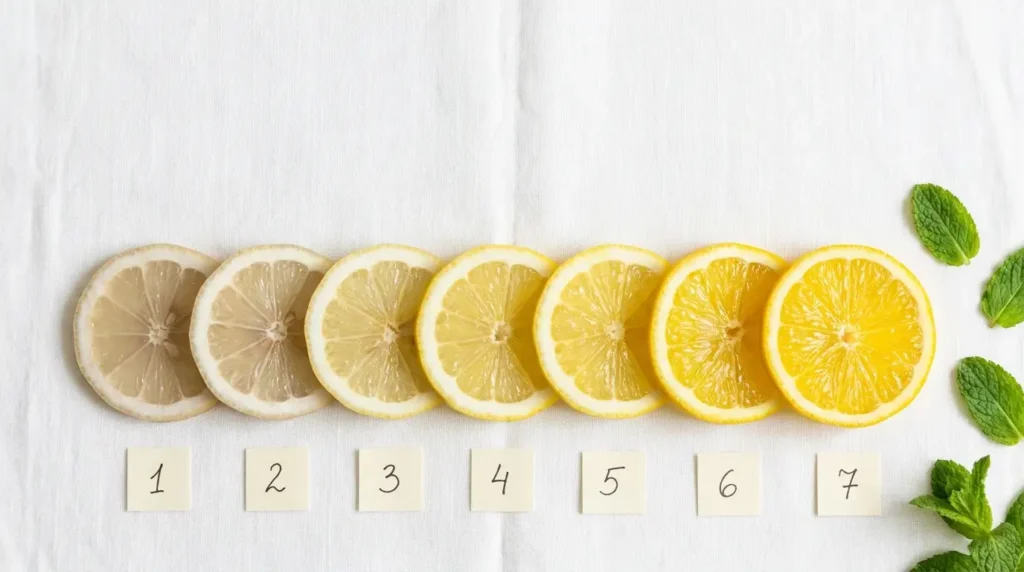
There’s one version of this challenge that sets you up for actual results, and another that wastes your mornings.
The effective version:
- Drink it first thing in the morning, before coffee, food, or anything else
- Use warm or room-temperature water — not ice cold, which can be harder on an empty stomach
- Squeeze half a medium lemon (fresh, not bottled — citric acid content drops significantly in processed juice)
- Drink through a straw or rinse your mouth with plain water afterward to protect tooth enamel
- Stay consistent — all 7 days, same time
What to avoid: drinking it within 30 minutes of brushing your teeth (the acid softens enamel temporarily), taking large sips rapidly, or drinking on an upset stomach if you’re prone to acid reflux.

- 10 oz warm or room-temperature water (not boiling)
Boosted Morning Lemon Water
For Days 4–7 once your stomach has adjusted, or anytime you want to amplify the base recipe:
Additional ingredients (choose 1–2):
- ¼ tsp fresh grated ginger — supports digestion and reduces nausea
- 1 thin slice of cucumber — adds trace electrolytes and mild flavor
- 1 small pinch of cayenne pepper — mild thermogenic effect, adds metabolism support
- ½ tsp raw apple cider vinegar — adds probiotic support and pH balance
Note: If you’re curious about how apple cider vinegar fits into your morning routine, we break down the exact timing windows and dilution ratios in our guide to when to drink apple cider vinegar for weight loss.
Macros (Boosted — with ginger + cucumber):
- Calories: ~10 | Carbs: 2g | Sugar: <1g | Vitamin C: ~22mg | Sodium: trace
Morning Lemon Water (Classic + Boosted)

A refreshing, gut-friendly morning drink packed with vitamin C and digestive support. Make the Classic version as your daily 7-day habit, or upgrade to the Boosted version on Days 4–7 by adding ginger, cayenne, or apple cider vinegar for extra wellness support.
- Prep Time: 2
- Total Time: 2
- Yield: 1 glass 1x
- Category: Morning Drinks
- Method: No-Cook
- Cuisine: American
- Diet: Vegan
Ingredients
Classic Version:
- 10 oz warm or room-temperature water (100–110°F)
- ½ medium fresh lemon, juiced (about 1½ tbsp)
- Optional: small pinch of raw honey
Boosted Version — add 1 or 2 of the following:
- ¼ tsp fresh grated ginger (digestion + nausea relief)
- 1 thin slice cucumber (trace electrolytes + mild flavor)
- 1 small pinch cayenne pepper (mild thermogenic effect)
- ½ tsp raw apple cider vinegar (probiotic support + pH balance)
Instructions
- Warm water to about 100–110°F — warm to the touch, not boiling. A kettle or microwave on low works fine.
- Squeeze half a fresh lemon directly into the water. Use a small strainer to catch seeds, but let the pulp through for extra fiber.
- Stir gently. For the Boosted version, add your chosen add-in(s) and stir again.
- Drink within 5 minutes of squeezing for maximum vitamin C potency — ascorbic acid degrades quickly once exposed to air.
- Rinse your mouth with plain water immediately after, or wait 30 minutes before brushing your teeth to protect enamel from citric acid.
Notes
Use fresh lemons only — bottled lemon juice loses significant vitamin C and citric acid content during processing and pasteurization. Drink through a straw to further minimize acid contact with tooth enamel. If you experience heartburn or nausea, reduce to ¼ lemon and use slightly cooler water. Nutrition data below reflects the Classic version without honey add-in.
Nutrition
- Serving Size: 1 glass (10 oz / 300 ml)
- Calories: 7
- Sugar: 1
- Sodium: 2
- Fat: 0
- Saturated Fat: 0
- Unsaturated Fat: 0
- Trans Fat: 0
- Carbohydrates: 2
- Fiber: 0
- Protein: 0
- Cholesterol: 0
The 7-Day Timeline: What to Expect, Day by Day

Day 1 — The First Glass
What you’ll notice: Probably not much physically. That’s completely normal.
Day 1 is mostly about your digestive system responding to something acidic on an empty stomach. For most people, the main sensation is a gentle warming in the belly — citric acid stimulates the production of saliva and gastric acid, which actually primes your stomach for the meal that follows. Some people notice a mild urge to use the bathroom within 20–40 minutes. That’s the gastrocolic reflex — warm liquid on an empty stomach, regardless of the lemon content, tends to get things moving.
You may also notice you’re a little more hydrated than usual throughout the morning simply because you started your day with a full glass of water. That alone is a meaningful shift for the majority of Americans, who wake up mildly dehydrated after 7–8 hours without fluids.
What won’t happen: You won’t “detox” anything, lose a pound, or see skin changes. One glass doesn’t override biology.
What to watch: If you feel nausea or heartburn, switch to cooler water and reduce the lemon to a quarter-squeeze. Acid reflux sufferers should approach Day 1 cautiously.
Day 2 — Hydration Takes Hold
What you’ll notice: A subtle but real improvement in how you feel before breakfast.
If you started Day 1 consistent and woke up and did it again, you’ve built the beginning of a morning anchor habit. Behaviorally, that matters — a morning ritual that requires almost no effort tends to compound into better decisions throughout the day. (This is partly why so many weight-loss success stories mention lemon water: the drink didn’t burn fat, but the morning intention did.)
Physiologically, two consecutive days of starting hydrated tends to show up as less mid-morning brain fog, slightly reduced puffiness in the face and hands (water retention from the prior day’s sub-optimal hydration starts clearing), and a more regular digestive schedule.
Your kidneys are also quietly benefiting from Day 1 onward: citric acid in lemon juice binds to calcium in urine, which research published in the Journal of Endourology (Penniston et al.) found may reduce the recurrence of calcium oxalate kidney stones. Not a dramatic Day 2 benefit, but it’s one of the most well-documented long-term reasons to keep this habit.
Day 3 — The Digestion Shift
What you’ll notice: This is typically the first day people notice something genuinely different.
By Day 3, your digestive system has adapted to the morning acid stimulus and is starting to respond more predictably. Many people report more regular bowel movements, reduced bloating after meals, and less of that heavy, sluggish feeling in the first hour after waking. The lemon’s citric acid supports the production of bile — a digestive fluid that helps break down fat — and may stimulate peristalsis (the muscular contractions that move food through your intestines).
The reduction in bloating at this stage is largely driven by hydration improvement and the mild digestive support, not any dramatic metabolic shift. But it’s real, and it’s one of the benefits most consistently reported in short-term challenges.
Energy: Some people notice slightly better morning energy around Day 3. This isn’t from caffeine or any stimulant effect — lemon water has none. It’s more likely a combination of improved hydration (even mild dehydration is associated with fatigue and difficulty concentrating, per research from the University of Connecticut) and the stabilizing effect of a consistent morning routine.
Day 4 — Early Skin Signals
What you’ll notice: Subtle improvements in skin texture or brightness in some people.
Here’s where the vitamin C content starts to accumulate in a meaningful way. Vitamin C is a cofactor in collagen synthesis — it’s directly involved in the enzymatic steps that build and repair the protein structure of your skin. Four days of consistent morning vitamin C intake (even modest amounts) can start supporting your skin’s baseline repair processes.
You won’t look five years younger. But some people notice slightly less dull, tired-looking skin, fewer visible dry patches, and a subtle evenness in skin tone. This is most noticeable in people whose baseline vitamin C intake was low to begin with — if your diet is already rich in citrus, bell peppers, and strawberries, the marginal effect will be smaller.
A note on “detox skin glow”: Much of the skin improvement attributed to lemon water is really just better hydration. Skin cells function better when you’re well-hydrated. The vitamin C is a genuine bonus, but water is doing most of the visible work.
Day 5 — Appetite and Bloating Patterns Become Clearer
What you’ll notice: A possible reduction in appetite before breakfast, plus noticeably less morning bloating.
This is the day many people doing the challenge feel most encouraged. There’s a real mechanism here: drinking a full glass of liquid before eating anything takes up stomach volume, which sends early satiety signals to the brain. A study published in Obesity (Dennis et al., 2010) found that drinking water before meals was associated with consuming approximately 75–90 fewer calories at that meal. That effect transfers to lemon water.
The bloating reduction by Day 5 is typically a combination of: (1) better hydration helping kidneys flush retained water more efficiently, (2) more consistent digestion reducing gas buildup, and (3) the psychological effect of a clean morning routine that often correlates with slightly cleaner eating overall.
Weight: If you’ve seen the scale move at all by Day 5, it’s most likely water weight — retained fluid that normalized as your hydration improved. Actual fat loss from lemon water alone in 5 days is not physiologically realistic. However, the calorie-reduction effect at breakfast may be real and worth noting.
Looking to build on this momentum with other flavored water options? Our roundup of best infused water recipes for weight loss has 15+ combinations designed to keep hydration interesting — including anti-bloat and energy-focused blends.
Day 6 — The Compounding Effect
What you’ll notice: The benefits from earlier days start feeling more consistent rather than occasional.
The digestive regularity you first noticed around Day 3 should now feel like your new normal. Energy levels upon waking tend to stabilize by Day 6 — not a dramatic spike, but the absence of that groggy, sluggish first 30 minutes that many people attribute to coffee dependency or poor sleep, when it’s often just dehydration.
Skin, if you were tracking it, typically looks its best during a 7-day lemon water stretch on Days 6 and 7. The compounding of daily vitamin C intake and improved hydration is at its maximum for this window.
One less-discussed benefit that becomes more apparent by Day 6: better oral awareness. The act of drinking something tart and refreshing first thing tends to naturally prompt better oral hygiene habits and more water consumption throughout the day — people who start lemon water routines consistently report drinking more water overall, not just the morning glass.
Day 7 — What You Actually Have (and Haven’t) Achieved
What you’ll realistically have:
- A meaningfully more consistent morning hydration habit
- Improved digestive regularity and reduced bloating (for most people)
- Slightly brighter or less-dull skin (especially if your prior vitamin C intake was low)
- Modest pre-meal appetite suppression that may have reduced your caloric intake by a small daily margin
- Better bowel movement regularity and timing
- Possible mild reduction in water retention
What you likely haven’t:
- Lost significant body fat (there is no evidence that lemon water burns fat directly)
- “Detoxed” your liver (your liver detoxes itself — lemon water doesn’t accelerate this)
- Meaningfully changed your blood sugar, cholesterol, or metabolic rate
- Cured any skin condition, digestive disease, or chronic health issue
The 7-day result is best understood as: a foundation, not a transformation. The real value of this challenge is that it often becomes permanent — people who do 7 days tend to keep going, and the cumulative effects over 30, 60, and 90 days are where the genuinely measurable changes appear.
What the Science Actually Supports
For a drink that’s essentially water and citrus juice, the research is more nuanced than you’d expect:
Vitamin C and skin collagen: A study in the Journal of Investigative Dermatology confirmed that ascorbic acid (vitamin C) stimulates collagen synthesis in human skin cells — a mechanism that supports the skin-brightening observations many people report. The effect is real but dose-dependent; the amounts in lemon water are modest.
Lemon polyphenols and body weight: A 2008 study by Fukuchi et al. published in the Journal of Clinical Biochemistry and Nutrition found that lemon polyphenols — specifically eriocitrin — suppressed diet-induced obesity and insulin resistance in mouse models. Human trials at these doses are limited, but the mechanism exists.
Pre-meal water volume and calorie intake: The Dennis et al. (2010) Obesity study remains one of the most-cited pieces of evidence for the appetite-suppression angle. 500 mL of water before meals was associated with a 13% reduction in caloric intake in overweight adults over 12 weeks. Lemon water can replicate this effect.
Citric acid and kidney stones: Among the most solidly evidenced benefits — dietary citrate from lemon juice increases urinary citrate levels, which inhibits calcium crystal formation. The evidence base here is more robust than for most other claimed benefits.
What Lemon Water Won’t Do (Myth-Busting)
Let’s clear up the most persistent claims circulating online:
“Lemon water detoxes your body” — Your kidneys and liver handle detoxification continuously. Lemon water doesn’t accelerate or enhance this process. Staying well-hydrated does support kidney function, but the lemon component doesn’t do anything your kidneys aren’t already doing.
“Lemon water is alkalizing” — This is the most misunderstood claim. Lemon juice is acidic (pH ~2–3). While its ash residue after metabolism is slightly alkaline, the effect on blood pH is physiologically insignificant. Your body regulates blood pH within a very narrow range (7.35–7.45) regardless of what you drink.
“Lemon water burns fat” — There is no meaningful evidence that lemon water increases fat oxidation in humans at the quantities consumed in a morning drink.
“You need to drink it warm to get the benefits” — Temperature affects palatability and stomach comfort, not the biochemistry of vitamin C or citric acid at moderate temperatures.
Who Should Be Careful
Lemon water is safe for the vast majority of healthy adults, but a few groups should exercise some caution:
- People with acid reflux or GERD: The citric acid can aggravate symptoms. Start with just a small squeeze and plenty of water, or skip it on flare days.
- People with canker sores: Acid can irritate mouth sores. Wait until they heal.
- People on certain medications: Lemon juice (like many citrus fruits) can interact with medications processed by the CYP3A4 enzyme, including some statins and certain blood pressure medications. Ask your doctor if you’re unsure.
- People undergoing cancer treatment or with citrus allergies: Obvious exceptions apply.
Building on Day 7: What Comes Next
If you’ve completed 7 days and want to keep the momentum going, here are the most natural next steps:
Extend to 30 days — Most of the skin and metabolic benefits that people attribute to lemon water in viral posts are actually 30-day effects, not 7-day effects. Give it a full month.
Stack it with a broader morning routine — Lemon water works best as part of a morning wellness stack. If you want to compare it to other options and find what works best for your goals, our guide to the best morning drinks for weight loss ranks the top seven with prep times under five minutes.
Try the Boosted version — The ginger-cayenne-ACV variation has a meaningfully stronger appetite-suppression and digestive effect than the classic recipe.
Pair it with better overall hydration — If getting more water in general is the goal, the best infused water recipes for weight loss gives you 15 flavor-packed combinations that make staying hydrated easy throughout the full day.
For a broader look at what the research says about the most effective drinks for fat loss — including where lemon water ranks against alternatives — see our comprehensive guide to the best drinks for weight loss in 2026.
FAQ: What Happens When You Drink Lemon Water for 7 Days
Not directly, and not in a meaningful fat-loss sense. What lemon water can do in 7 days is reduce water retention, support digestive regularity, and create a modest pre-meal appetite-suppression effect — all of which may reflect on the scale. But actual fat tissue doesn’t change in a week from lemon water. The real weight-loss support comes from building the habit long-term and using it as part of a calorie-conscious morning routine.
One glass (8–12 oz) with half a lemon’s worth of juice is the standard, consumed in the morning before eating or drinking anything else. More than one glass per day provides diminishing returns and increases the risk of dental enamel erosion from repeated acid exposure.
For many people, yes — particularly within the 3-to-7-day window. The mechanism is primarily hydration normalization (your kidneys flush retained water more efficiently when you’re consistently hydrated) and mild digestive stimulation from citric acid. It’s one of the most commonly reported and plausible benefits of the daily lemon water habit.
Modestly, yes — particularly if your diet was previously low in vitamin C. Vitamin C is essential for collagen synthesis, and consistent daily intake (even modest amounts) can support skin cell repair over 5–7 days. The more visible change is usually improved radiance from better hydration rather than structural skin change, which takes longer.
Warm water is generally recommended for morning consumption because it’s gentler on an empty stomach, supports the gastrocolic reflex more effectively, and is absorbed slightly faster than cold water. However, if you find cold lemon water easier to drink consistently, the biochemical benefits are nearly identical — consistency matters more than temperature.
Adding a small pinch of Himalayan pink salt to your lemon water creates a simple electrolyte drink that better replaces what you lose overnight through breathing and minor perspiration. The sodium-potassium balance shifts slightly in a favorable direction for hydration. We cover the full recipe, ratios, and safety notes in our guide to the viral pink salt drink for weight loss.

The Bottom Line
What happens when you drink lemon water for 7 days? You get meaningfully better hydration, steadier digestion, early signals of improved skin quality, a reduction in bloating for most people, and — if you use it to displace a higher-calorie morning drink — a modest calorie reduction. You do not get a metabolic overhaul, a fat-burning activation, or a full-body cleanse.
That’s not a knock on lemon water. It’s one of the simplest, cheapest, most consistently beneficial health habits in the wellness toolkit — not because it’s magic, but because it works through real, modest, compounding mechanisms. The 7-day challenge is the door. What’s behind it is the rest of your morning routine.
Sources: Penniston KL et al., J Endourol (2007); Dennis EA et al., Obesity (2010); Fukuchi Y et al., J Clin Biochem Nutr (2008); Armstrong LE, Nutrients (2012); Nusgens BV et al., J Invest Dermatol (2001).
Disclaimer: This article is for informational purposes only and does not constitute medical advice. Consult a registered dietitian or physician before making significant changes to your diet, particularly if you have a history of acid reflux, kidney disease, or are taking medications.